Meridian Community Centre Consolidated Deficits
The MCC is a wonderful modern recreational activities centre. It is a jewel for Pelham and benefits residents and others from outside our municipality.
Unfortunately, there are costs associated with keeping the MCC operating. There are debts to be paid originating from the MMC founding a decade or more in the past.
The current debt load on the municipality is approximately $19.8 million. This is 90% of the town’s long-term debt. Interest rates on these MMC loans vary from 2% to 3.3%.
The community of Pelham needs to be aware of the MCC finances and have perspective of how the MCC stands up in relation to the overall town finances.
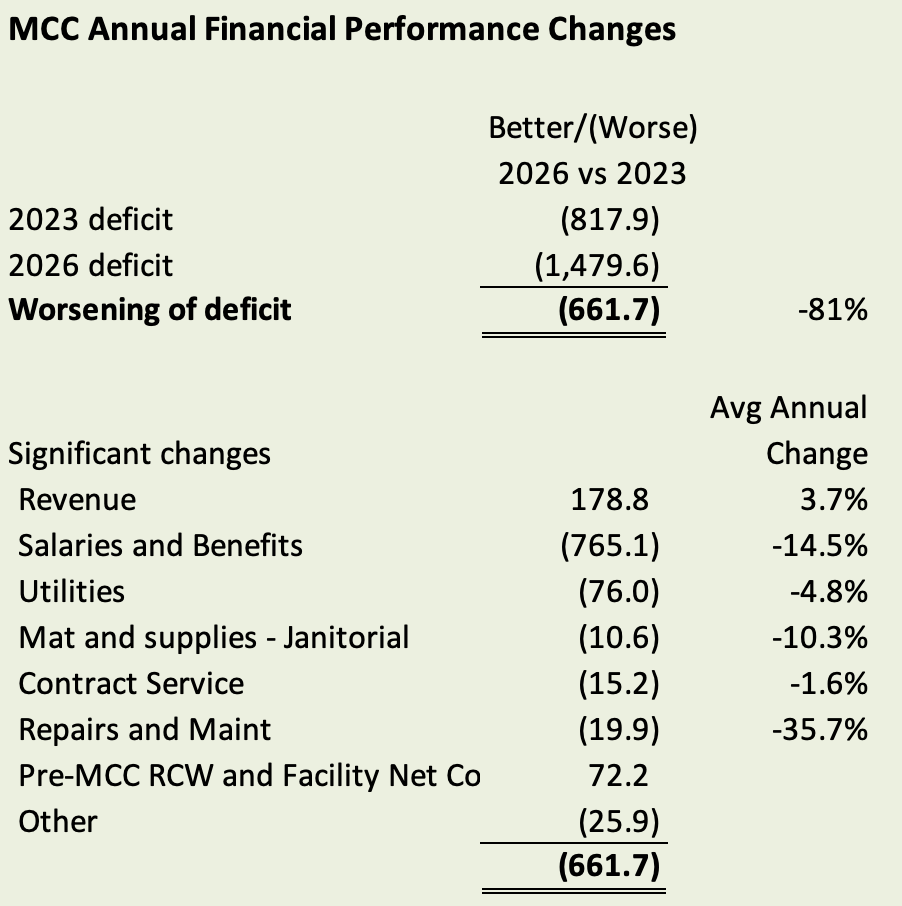
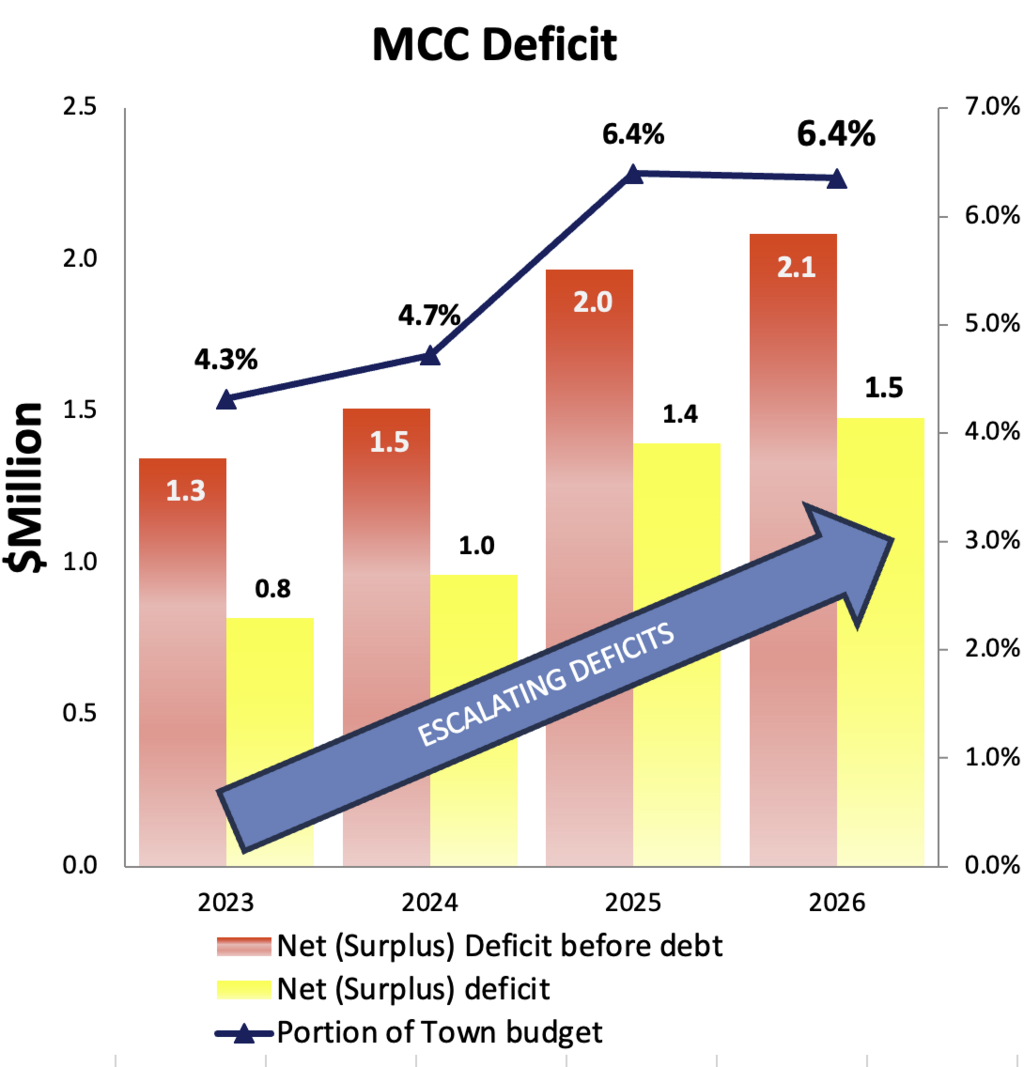
The 2026 planned net deficient is of the MCC is planned at $1.5 million. The 2025 budget deficit was $1.4 million. 2024 $1.0 million and 2023 $818 thousand.
In four years the MCC deficit has almost doubled and is trending in the wrong direction. The following schedule outlines the three-year change into major categories. All values are in thousands of dollars.
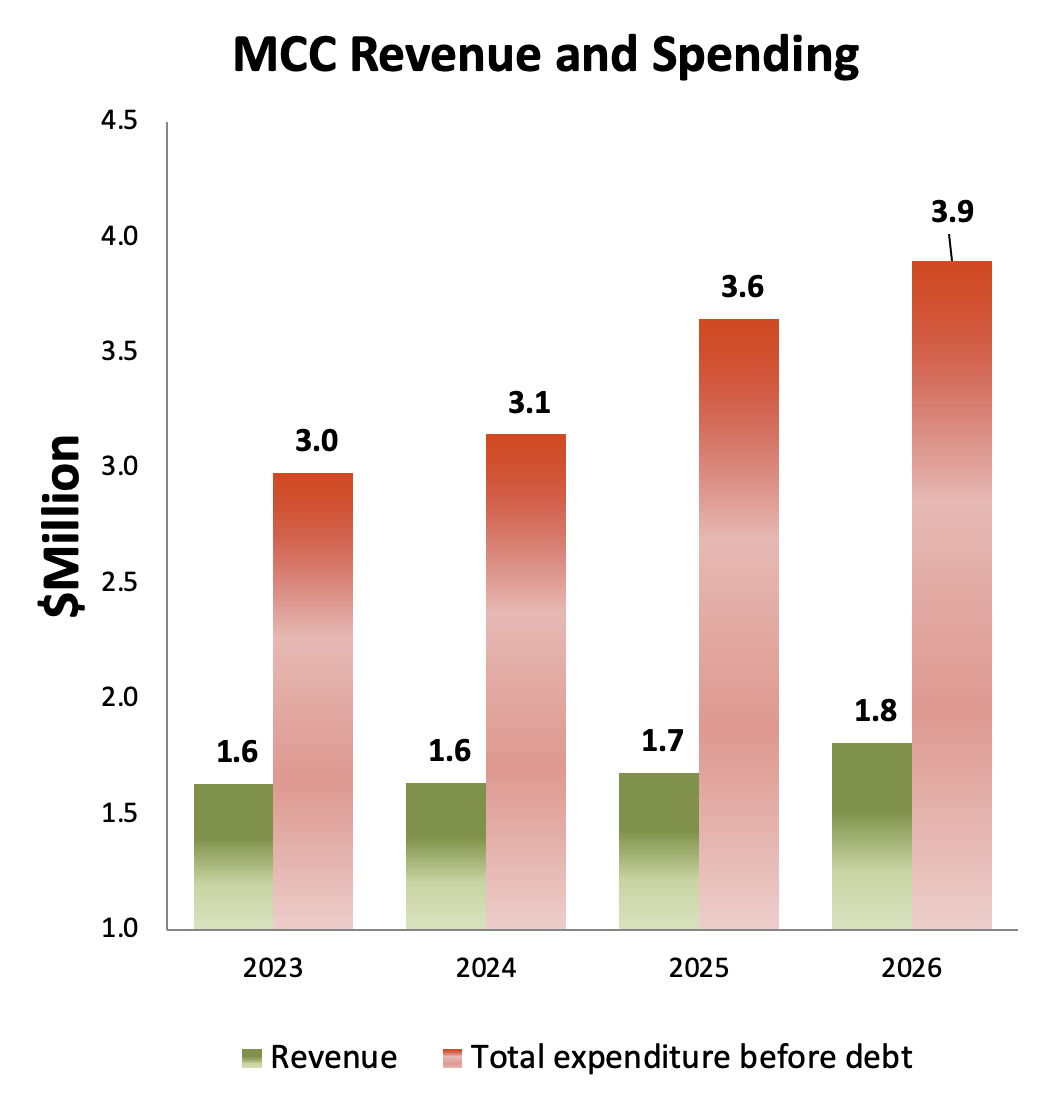
This chart compares revenue growth (green bars), averaging 3.7% per year, to expense growth (red bars). Expenses are growing faster than revenue.
The MCC Consolidated deficits are now just over 6% of the municipality’s operating budget.
Key points
The Mayor and Council need to reconsider if these deficits and trending are acceptable. They also need to consider if it’s appropriate for all Pelham property tax payers to subsidize the MCC to this extent.
Possible Action Items
Benchmarking
Research comparable recreation centres to understand best practices and bring them to Pelham.
Measure what you need to manage
Scrub the MMC budget to ensure we are only including cost and revenues that are directly associated with the core MCC mandate. Other costs need to be evaluated on their own merits and not included in the MCC budget. Reevaluate the MCC cost position.
Drive a value improvement plan internally at the MCC, find savings, revenue growth.
Outsource management of the core MCC mandate. Governments do not always do well in managing cost infrastructures as they aspire to deliver services and benefits and not cost efficiency.